The agricultural sector faces a clear challenge. The global population continues to grow, food demand is increasing, and at the same time pressure is mounting to use resources such as water, fertilizers and crop protection products more efficiently. The potato sector is no exception. Growers must continue to produce under changing conditions, while society expects food to be produced with the lowest possible environmental impact. Meeting that challenge requires new solutions.
Why the potato production systems of tomorrow require precision
When discussing these solutions, people often think of new technologies on the farm or changes in legislation. Yet part of the answer lies elsewhere: in knowledge. Understanding why a variety performs the way it does and which factors influence that performance.
At Royal HZPC Group, that search for knowledge is central. Every year, we invest a significant share of our resources in research and development. An important part of that effort focuses on improving our understanding of how potato varieties interact with nutrients.
Varieties differ in their nutritional requirements and nutrient-use efficiency. Not every variety takes up nutrients in the same way, and not every variety uses those nutrients equally efficiently.
Not every variety is the same
In practice, potato varieties often receive similar fertilization recommendations. At the same time, experience tells us that no two varieties are exactly alike. Some grow faster, others build dry matter more efficiently. Some varieties use available nutrients very effectively, while others are more sensitive to deficiencies.
These differences raise an important question: do all varieties really have the same nutritional requirements? To answer that question, Royal HZPC Group is investigating how different nutrients influence potato growth, yield and quality. The research goes beyond nitrogen and also includes other macro- and micronutrients.
According to Mohammad Ghanbari, Program Leader Biometrics & Quantitative Genetics, this research could play an important role in the future of potato production. “One of the most important lessons we are currently learning is that varieties differ in their nutritional requirements and nutrient-use efficiency. Not every variety takes up nutrients in the same way, and not every variety uses those nutrients equally efficiently.”
According to Mohammad, this creates opportunities to unlock the genetic potential of varieties more effectively. “When we better understand which nutrients contribute to yield and quality, we can ultimately support growers with more precise recommendations. This helps combine higher yields with more efficient use of resources.”
The better we understand what a variety needs, the more precisely we can manage its performance.
From standard recommendations to tailored solutions
This development fits within a broader trend in agriculture. For decades, fertilization strategies primarily focused on preventing deficiencies. Today, the focus is increasingly shifting towards efficiency: how do we ensure a plant receives exactly what it needs, no more and no less?
That requires a different way of thinking. “Potato production will increasingly revolve around nutrient-use efficiency,” says Mohammad. “Climate change, stricter regulations and the environmental impact of fertilizers are making it increasingly important to use nutrients more intelligently.”
The ultimate goal is not simply to apply fewer fertilizers. The goal is to better understand nutrients and use them more strategically. As Anouk Piquet, Manager Research Operations, explains: “The idea is that one day we may be able to provide variety-specific nutritional recipes. Almost like a multivitamin tailored to a particular variety. The better we understand what a variety needs, the more precisely we can manage its performance.”
That future vision is promising, but it is not yet a reality.
The power of data
The research is currently in the second year of a three-year programme. For that reason, the researchers remain cautious about drawing conclusions. Early results are promising, but it is still too early to make definitive statements.
Research starts with a question, not with an answer. Sometimes the data confirm a hypothesis, while in other cases they point in a different direction. By measuring and comparing results over multiple years, researchers can build a more reliable understanding of the relationship between varieties, nutrients and performance.
Reliable data are essential to developing those insights. That is why Royal HZPC Group collaborates with research and industry partners to develop new ways of measuring and analysing nutrients in both soil and plants. Modern analytical techniques make it possible to gain much faster insight into the nutritional status of a crop than was possible only a few years ago.
This knowledge benefits not only researchers, but also offers clear prospects for practical application. “Ultimately, we do not only want to know which nutrients are important,” says Anouk. “We also want to understand why a variety performs less well under specific conditions and how we can explain those differences.”
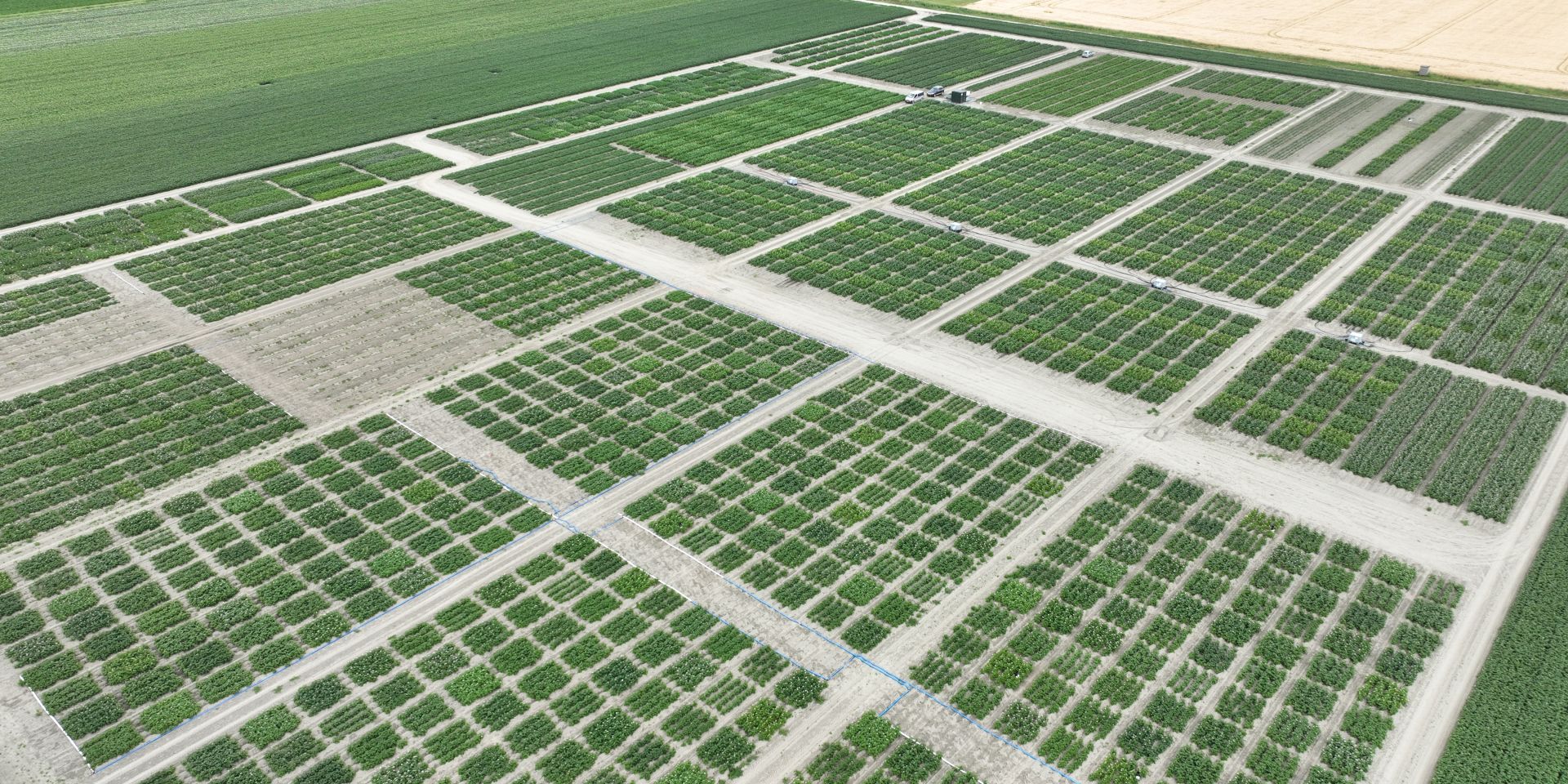
Research fields Royal HZPC Group
Knowledge as the foundation for sustainability
Public discussions about agriculture often focus on inputs such as fertilizers, emissions or regulations. Equally important, however, is the role that knowledge can play in developing solutions. Plant breeding, data analysis and agronomic research are often viewed as separate disciplines. In reality, they continuously reinforce one another. New varieties create new opportunities, while research helps us better understand and unlock those opportunities.
For Royal HZPC Group, this is nothing new. For more than a century, we have invested in knowledge to improve potato production step by step. Plant breeding, data analysis and agronomic research work hand in hand. New varieties create possibilities, while research helps us understand how to make the most of them.
The trial is still ongoing, and final conclusions have yet to be drawn. Yet one thing is already clear: the more we understand the relationship between variety, nutrition and performance, the better we can support growers with insights that work in practice.
It is an approach that reflects how we have operated for more than one hundred years: continuously building better potato varieties and a stronger potato sector